European Adventures
The period between 1996 and 2003 was one of the most dramatic and transformative in Leeds United�s history, marked by managerial upheaval, European success, and ultimately financial mismanagement that set the club on a path to decline. Leeds� story during this time is one of highs and lows, from the glamour of European nights to the horrors of Istanbul and legal troubles, with the team�s fortunes mirroring the reckless financial gamble taken by Peter Ridsdale. This mismanagement ultimately led to Leeds� relegation from the Premier League in 2004, marking the start of a turbulent era for the club.
George Graham's Defensive Foundations (1996�1998)
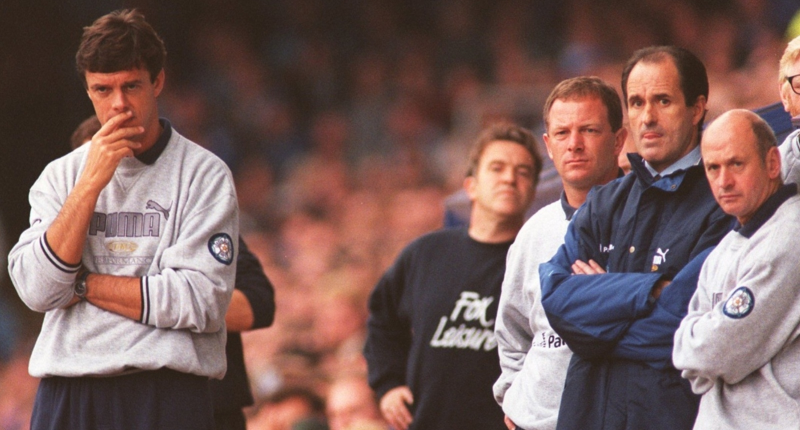
After Howard Wilkinson�s departure in September 1996, George Graham arrived with a reputation for defensive discipline, transforming Leeds into one of the Premier League�s toughest sides to break down. Despite a shaky start�five defeats in six games�Leeds responded with remarkable solidity: six clean sheets in seven matches, culminating in an 11th-place finish in the 1996�97 season. Key signings such as Bruno Ribeiro and Jimmy?Floyd Hasselbaink, along with youth prospects like Harry Kewell, reinforced the squad.
Building on this foundation, Graham�s second season saw Leeds climb to 5th place, securing UEFA Cup qualification. The team scored freely (57 goals in the league) while maintaining its defensive identity. Lucas Radebe, Nigel Martyn, and Robert Molenaar formed the spine of resilience. However, Graham departed abruptly in October 1998 to manage Tottenham�leaving Leeds with defensive solidity but on the cusp of greater ambitions.
David O�Leary�s Fearless Youth Revolution (1998�2000)
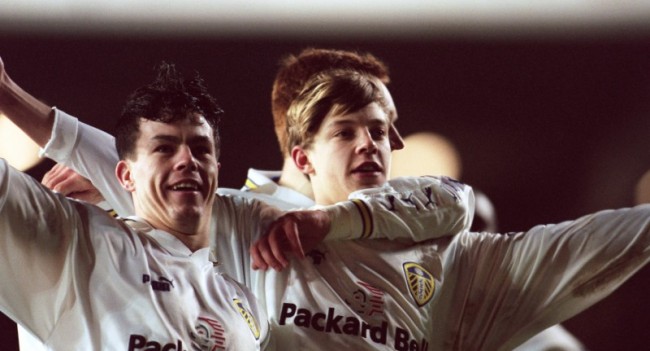
Promoting assistant David O�Leary, Leeds entered a new era centred on youthful exuberance and daring football. O�Leary unleashed talents like Harry Kewell, Jonathan Woodgate, Alan Smith, and Ian Harte, while pairing them with established professionals such as Nigel Martyn and Mark Viduka. The result was stability and flair�Leeds finished 4th in 1998�99, earning a UEFA Cup spot, followed by a spectacular 3rd-place finish in 1999�2000, which delivered Champions League qualification.
In 1999�2000, Leeds embarked on a memorable UEFA Cup journey, defeating high-calibre opponents before reaching the semi-finals. However, tragedy struck when fans Chris Loftus and Kevin Speight were tragically killed in Istanbul ahead of the semi-final against Galatasaray. Leeds drew 2�2 at home but bowed out on aggregate, overshadowed by grief. Meanwhile, their domestic form remained strong�this was a Leeds side in full flight.
Champions League Breakthrough & Off-Pitch Turmoil (2000�2002)
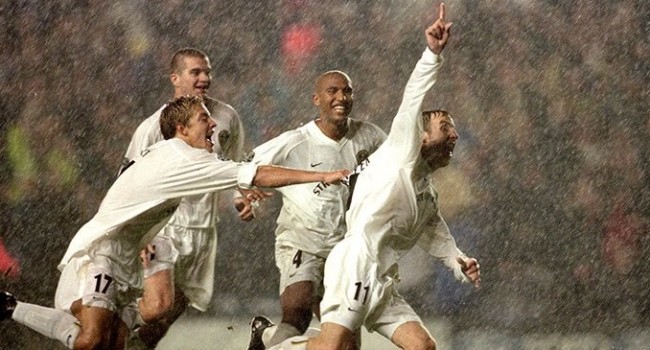
Leeds migrated seamlessly to Europe�s top table in 2000�01 after a final qualifying round against 1860 Munich. A packed Elland Road watched as Leeds secured a 2�1 win thanks to goals from Ian Harte and Alan Smith, before holding on in Germany to advance.
In the group stage, Leeds were drawn with Barcelona, AC Milan, and Be?ikta?. Impressively, they secured a memorable 1�0 home win against Milan, convincingly beat Be?ikta? 6�0, and drew 1�1 with both Barcelona and Milan at the San Siro, finishing top of the group.
In the knock-out rounds, Leeds overcame Deportivo La Coru�a with a 3�0 home win, before facing Valencia in the semi-finals. After a hard-fought 0�0 draw at Elland Road, they suffered a 3�0 defeat in Valencia, ending their run one tie short of the final.
Domestically, Leeds finished 4th in the Premier League, narrowly missing out on automatic Champions League qualification. Off-pitch, the club's reputation was dented by the high-profile Bowyer�Woodgate trial, which ran through 2000�01. While Bowyer was acquitted and Woodgate convicted of affray, the saga cast a shadow over Leeds� most successful period.
Financial Overreach & Unravelling (2002�2003)
Despite four consecutive top-five finishes, Leeds� ambition continued unchecked. Chairman Peter Ridsdale mortgaged the future on Champions League income, investing heavily in players like Robbie Fowler, Rio Ferdinand, and Olivier Dacourt. Failure to requalify for Europe in 2001 and 2002 left the club in peril�especially after banking on high-level revenues that never materialised.
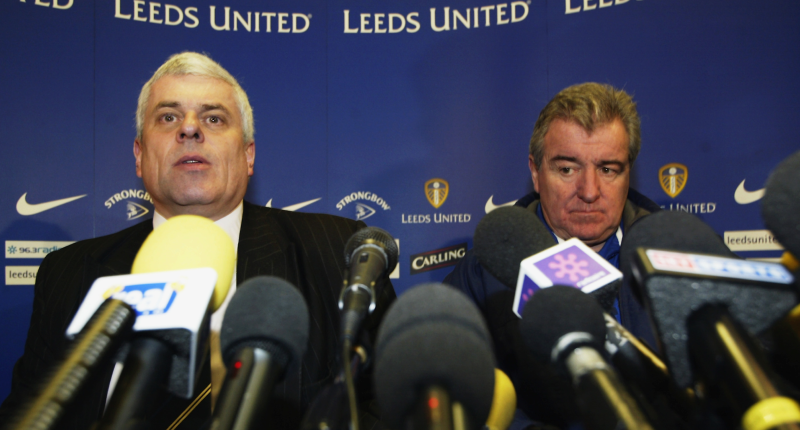
In June 2002, O�Leary was dismissed�widely perceived as scapegoating for unsustainable indebtedness. His replacement, Terry Venables, was forced to sell star defender Rio Ferdinand for a British record �30?million, alongside Fowler and Robbie Keane. While the sale staved off immediate financial collapse, it weakened the squad significantly.
By March 2003, Peter Reid had replaced Venables, and Leeds narrowly avoided relegation by finishing 15th, but the damage was done. The club�s European ascent had brought fame and emotion, yet its legacy would be defined by financial overreach�and a fall that reverberated through the decades.
An Era of Glory and Collapse
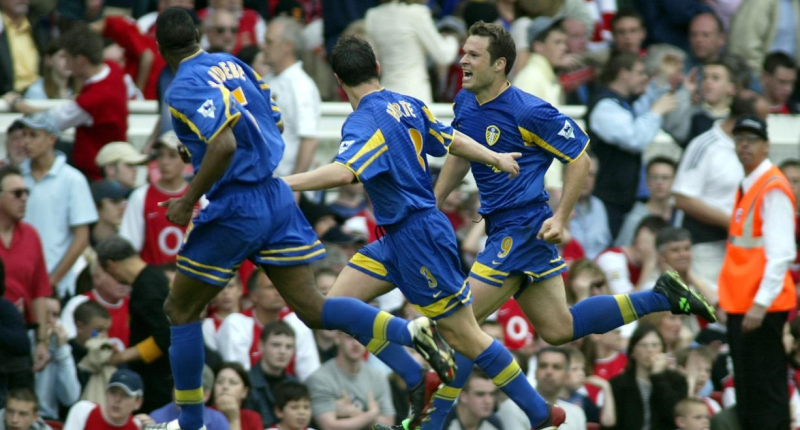
Leeds United�s continental exploits�from the run to the 2000 UEFA Cup semi-finals to the 2001 Champions League improbable journey�represent the pinnacle of the modern era. Combining athletic flair, tactical determination, and emotional resonance, the European nights at Elland Road rekindled the pride of club and community. Yet financial overreach, boardroom decisions, and legal entanglements undermined the long-term sustainability. These campaigns offered moments of brilliance, but they also set the stage for perennial challenges, changing the trajectory of Leeds United's fortunes for years to come.
| Period Summary | Division | Pos (Pts) | FA Cup |
Lg Cup |
Europe |
Other |
| 1996-1997 Details | Premier League | 11 (46) | R5 |
R3 |
- |
- |
| 1997-1998 Details | Premier League | 5 (59) | QF |
R4 |
- |
- |
| 1998-1999 Details | Premier League | 4 (67) | R5 |
R4 |
UC (R2) |
- |
| 1999-2000 Details | Premier League | 3 (69) | R5 |
R4 |
UC (SF) |
- |
| 2000-2001 Details | Premier League | 4 (68) | R4 |
R3 |
CL (SF) |
- |
| 2001-2002 Details | Premier League | 5 (66) | R3 |
R4 |
UC (R4) |
- |
| 2002-2003 Details | Premier League | 15 (47) | QF |
R3 |
UC (R3) |
- |
 |
 |